Chinese Tech Firms Accelerate Push Against Google in AI Image Generation
Leading Chinese technology companies are ramping up efforts to challenge Western dominance in generative AI, unveiling lower-cost alternatives to Google’s Nano Banana image model. In the past week, firms including ByteDance and Alibaba Cloud introduced new AI image generation tools aimed at both individual and business users, reflecting broader competitive and geopolitical trends in artificial intelligence.

Google’s Nano Banana: Benchmark in AI Imaging
Part of Google’s Gemini AI family, Nano Banana has set a standard in text-to-image generation through a combination of speed, visual fidelity, and accessibility. While widely adopted by creative professionals, enterprises, and developers, its premium pricing and proprietary nature opened a market gap for cost-effective alternatives.
China’s Domestic AI Tools Enter the Fray
ByteDance: Seedream 5.0
- Available in beta on CapCut and Jimeng platforms
- Features improved reasoning and accuracy compared to previous iterations
- Positioned as a cost-effective alternative to Nano Banana for creators and SMEs
Alibaba Cloud: Qwen-Image-2.0
- Combines image generation and editing capabilities
- Targets merchants and enterprises for automated content creation in marketing, e-commerce, and advertising
- Emphasizes scalability and integration within Alibaba’s ecosystem
Why Pricing Matters
Google’s Nano Banana is priced for performance, integration, and reliability, which can be a barrier for small and medium enterprises (SMEs) or independent developers generating large volumes of content.
Chinese AI tools leverage:
- Cost efficiencies in local data centers
- Use of older-generation hardware not restricted by U.S. export controls
- Aggressive marketing for affordability
This strategy positions ByteDance and Alibaba to capture cost-conscious users while expanding generative AI adoption in domestic and regional markets.
Performance and Market Implications
While pricing is a key differentiator, technical capabilities and ecosystem integration are equally important:
- Some Chinese models outperform in text-to-image reasoning
- Others excel in workflow integration within their platforms
- Google retains advantages in photorealism, language diversity, and enterprise adoption
The rise of Chinese AI tools occurs amid geopolitical and technological competition, where U.S. export restrictions and domestic AI policies drive innovation within China’s ecosystem. Lower-cost domestic alternatives also cater to local language and cultural nuances, appealing to Chinese users and enterprises.
Enterprise Adoption and Workflow Integration
AI-powered image generation is becoming central to digital workflows in:
- Advertising
- E-commerce
- Content creation
Affordable tools from ByteDance and Alibaba could reduce production costs while automating creative tasks, particularly for businesses that require large-scale content generation. Interoperability, APIs, and integration with other software will shape enterprise adoption in the coming years.
Standards, Ethics, and Future Trends
The proliferation of competing models highlights the need for:
- Output quality benchmarks
- Interoperability standards
- Ethical and regulatory frameworks addressing copyright, misinformation, and content authenticity
Looking ahead:
- Chinese firms are expected to expand into multimodal AI, combining text, image, audio, and video generation
- Global players like Google continue to refine AI performance, security, and accessibility
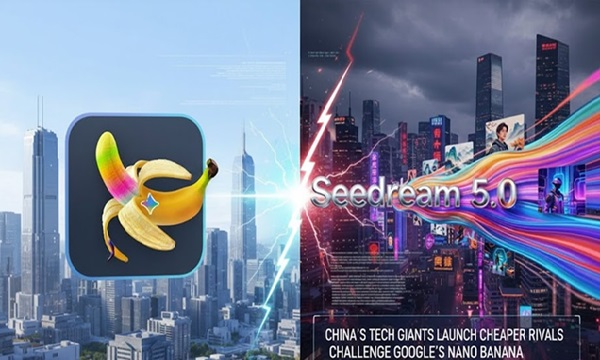
The recent launches from ByteDance and Alibaba Cloud mark a critical phase in the global generative AI race. By offering affordable alternatives to Google’s Nano Banana, Chinese companies challenge assumptions about technological leadership and aim to capture both consumer and enterprise markets. Market share, ecosystem integration, and geopolitical developments will determine whether these tools establish long-term competitive advantage.