Gemini AI Brings Smarter Navigation to Walkers and Cyclists
How AI Is Redefining Urban Mobility
Navigation has long focused on drivers, but AI-powered tools like Google’s Gemini are shifting the paradigm to prioritize pedestrians and cyclists. With urban centers increasingly dense, mobility now requires human-scale solutions rather than car-centric routes.
Gemini AI uses real-time data to consider safety, terrain, lighting, and user preferences, offering smarter, context-aware navigation. This development marks a significant shift from traditional GPS, which mainly calculates the fastest route.
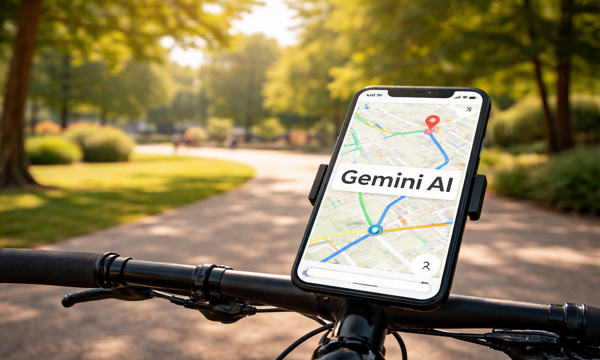
Context-Aware Routing for Pedestrians and Cyclists
Gemini AI combines satellite imagery, crowdsourced data, and historical patterns to provide personalized route recommendations.
- Walkers: Sidewalks, crossings, shaded paths, and less congested routes
- Cyclists: Bike lanes, elevation, road quality, and traffic density
Dynamic recalculation ensures routes remain optimal during construction, traffic changes, or bad weather, making journeys safer and more efficient.
AI and Data Signals Drive Smarter Maps
The success of AI navigation depends on high-quality data. Gemini leverages:
- Official mapping data
- Crowdsourced updates
- Behavioral patterns from millions of users
Machine learning allows the system to learn from user interactions, refining recommendations over time. Privacy is maintained through anonymized data while ensuring personalized routing.
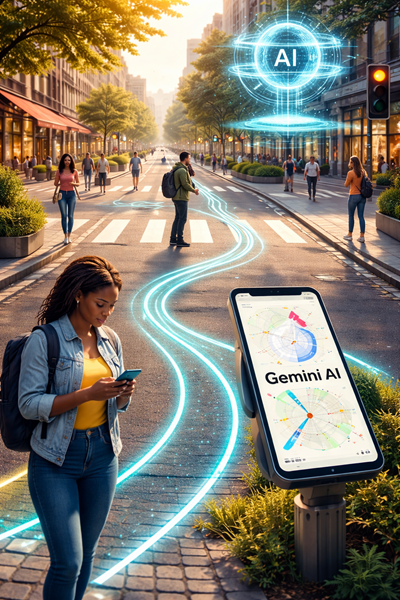
Urban Mobility Trends Accelerate Adoption
AI-powered navigation aligns with global trends:
- Cities expanding pedestrian zones and cycling infrastructure
- Micro-mobility growth, including shared bikes and e-scooters
- Users expect routes optimized for air quality, noise, and aesthetics
Gemini AI addresses these needs by integrating multiple modes of transport into one seamless system.
Competition in the Mapping Market
AI-driven features are becoming a key differentiator in navigation:
- Google’s Gemini strengthens engagement and ecosystem integration
- Apple and regional mapping providers are investing in similar AI capabilities
- Smarter routing drives competition, innovation, and improved user experiences
Infrastructure and Policy Implications
AI navigation influences urban planning:
- Popular AI-suggested routes can guide infrastructure upgrades
- Data helps city planners identify gaps in pedestrian and cycling safety
- Private companies and public agencies must coordinate for urban improvements
Challenges in Scaling AI Navigation
Adoption is not without obstacles:
- Uneven data quality in developing markets
- Real-time processing demands high computational power
- Building user trust requires transparency and control
Despite these challenges, Gemini AI is reshaping how urban mobility is approached.
Outlook: Human-Centric Navigation
Gemini represents a shift toward human-centered mapping, where:
- Routes adapt to individual preferences
- Predictive insights anticipate crowd movements and optimal departure times
- Integration with wearables and AR may enhance guidance
AI-driven navigation is set to become central to urban life, making walking and cycling smarter, safer, and more efficient.