Samsung 6G Trial in South Korea: Milestone for Next-Gen Networks
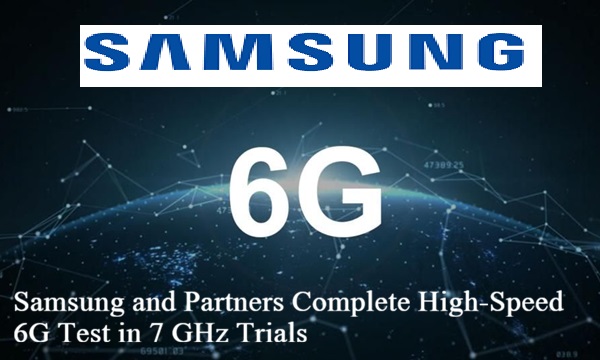
Samsung’s latest announcement from South Korea marks a significant step in the development of 6G wireless technology. Working alongside KT Corporation and Keysight Technologies, Samsung reported peak downlink speeds of 3 gigabits per second (Gbps) using experimental hardware operating in the 7 GHz frequency band. This achievement, while early-stage, highlights tangible progress in a field that has so far been dominated by academic research and theoretical models.
The trial underscores the growing momentum behind 6G, expected to succeed 5G later this decade. While commercial 6G services are not projected until around 2030, Samsung’s experimental validation demonstrates the potential for higher capacity, faster speeds, and lower latency networks.
The 7 GHz Trial: What Happened
The field test occurred at Samsung’s Seoul R&D campus, simulating real-world wireless conditions. The key technology tested was an ultra-high-density antenna system capable of transmitting multiple simultaneous data streams.
- The prototype base station included 256 digital ports, enabling eight independent streams.
- Peak downlink speeds of 3 Gbps were recorded, a notable improvement over current 5G deployments under similar conditions.
- X-MIMO technology was central to this trial. This advanced version of multiple-input multiple-output systems increases spectral efficiency by packing more antenna components into a compact unit.
The 7 GHz frequency is significant because it sits between mid-band 5G (around 3.5 GHz) and millimeter-wave frequencies. It offers a balance of speed, coverage, and penetration, making it a likely candidate for early 6G deployments.
Why This Trial Matters
While peak speed figures are impressive, the importance of this trial extends beyond headline numbers. Commercial 5G networks can already achieve multi-gigabit throughput under ideal conditions. What makes Samsung’s trial noteworthy is:
- Field validation: The results were achieved outside a purely lab environment.
- Standards alignment: Technology used reflects candidate approaches for future 6G specifications.
- Efficiency and scalability: Early tests indicate the potential to handle dense urban environments and high-traffic scenarios.
Samsung has emphasized that 6G networks aim for AI-native and sustainable communication, integrating artificial intelligence across network layers to enable advanced services like extended reality, ubiquitous connectivity, and fixed wireless access.
Collaborative Effort Drives Innovation
6G development cannot rely on a single company. Samsung’s trial was a joint effort:
- KT Corporation: Provided expertise in network deployment and outdoor testbed management.
- Keysight Technologies: Supplied specialized test equipment to emulate terminal behavior.
Collaboration reflects the industry reality that future wireless standards require alignment among carriers, equipment vendors, regulators, and test organizations. Similar partnerships include Samsung’s work with SK Telecom on AI-enabled radio access network technologies.
International standard bodies such as 3GPP are also laying the groundwork for preliminary 6G specifications, while governments in South Korea, Europe, and the U.S. are funding research to accelerate commercialization by the end of the decade.
Technical Details Behind the Breakthrough
Several technical advancements made this trial possible:
- X-MIMO Technology: Increases spectral efficiency and allows multiple data streams to be transmitted simultaneously.
- High-Density Antenna Systems: Crams more components into compact units, overcoming propagation limits of higher frequency bands.
- Advanced On-Device AI: Supports faster processing, adaptive beamforming, and dynamic resource allocation.
These developments enable not just higher speeds, but also consistent and scalable performance—crucial for dense urban areas and industrial applications.
Beyond Speed: The Real Value of 6G
Peak throughput alone doesn’t define the success of future networks. Analysts point to multiple metrics that matter:
- Latency: Ultra-low response times for real-time applications.
- Reliability: Stable connections under high-load conditions.
- Energy Efficiency: Sustainable operation for billions of devices.
- Massive Connectivity: Ability to support IoT, smart cities, and industrial automation.
The FCC’s 2025 advisory committee on 6G emphasized these factors, urging new networks to be secure, resilient, and compatible with legacy infrastructure while enabling novel services.
Samsung’s Broader 6G Vision
Samsung’s white paper on 6G outlined a vision of AI-native and sustainable networks, where artificial intelligence governs:
- Dynamic resource allocation
- Predictive maintenance
- Enhanced security
- Optimized energy consumption
The company aims to integrate AI at every network layer, enabling faster deployment of emerging services such as extended reality (XR), autonomous vehicles, and smart factories.
Industry Implications
A functional 6G ecosystem would reshape telecom and tech industries:
- For operators: Delivering consistent multi-gigabit speeds could provide fixed wireless alternatives to fiber broadband.
- For equipment makers: Leadership in foundational technology translates to long-term competitive advantage.
- For regulators: Global spectrum allocation and standardization are essential to achieve interoperability.
These factors highlight why early trials are critical—they inform device design, infrastructure investments, and policy decisions.
Challenges Remaining Before Commercialization
Despite promising results, commercial 6G is still years away. Challenges include:
- Standards finalization: Aligning international regulations and frequency allocation.
- Device development: Handsets, base stations, and terminal devices must be 6G-ready.
- Infrastructure scaling: Urban, suburban, and rural coverage require substantial investment.
- Energy and heat management: High-speed data transmission consumes significant power.
Incremental field trials like Samsung’s 7 GHz experiment help validate concepts but do not yet represent complete network solutions.
Global Context and Competition
Other vendors and research organizations are accelerating 6G development:
- China: Conducting high-frequency millimeter-wave trials.
- Europe: Testing AI-integrated network cores and edge computing solutions.
- United States: Funding research in sub-terahertz communications and ultra-low latency systems.
Samsung’s South Korean trial positions the company at the forefront of 6G technology, highlighting its leadership in next-gen wireless infrastructure.
Applications Enabled by 6G
Once commercialized, 6G could unlock transformative services:
- Smart cities: Real-time monitoring and management of traffic, energy, and utilities.
- Industrial IoT: Fully connected factories with AI-driven automation.
- Remote medical services: High-quality telemedicine and robotic surgery.
- Extended reality (XR): Fully immersive AR/VR experiences with minimal latency.
- Autonomous vehicles: Seamless vehicle-to-everything communication for safer transport.
Such applications will rely on 6G’s combination of speed, low latency, and massive connectivity.
Future Field Trials and Research
Samsung and its partners will continue testing:
- Sub-terahertz frequencies: Promising extremely high throughput but challenging coverage.
- Hybrid X-MIMO and AI systems: Further improving spectral efficiency and reliability.
- Network densification: Testing performance in crowded urban environments.
These trials will feed into global standardization efforts, ensuring 6G networks are ready for commercial deployment by 2030.
6G is a Marathon, Not a Sprint
Samsung’s 6G trial in South Korea is a milestone in wireless technology, demonstrating real-world potential for AI-native networks. While full commercialization remains years away, the trial:
- Validates X-MIMO and high-density antenna technology
- Demonstrates peak 3 Gbps downlink speeds
- Highlights the importance of AI and collaboration in next-gen networks
As the industry continues to experiment and standardize, 6G promises to redefine connectivity, enabling applications that go far beyond current 5G capabilities. Samsung’s leadership in this space could set the stage for global 6G adoption, influencing infrastructure investments, regulatory policies, and future mobile services worldwide.
The road to 6G may be long, but each field trial, like this South Korean experiment, brings the world one step closer to realizing faster, smarter, and more connected networks.