WhatsApp Introduces Guest Chats for Non-Users
Messaging platforms have traditionally operated as closed systems. Users could only communicate with others who had installed the same application. This created digital silos across services like Telegram and Signal.
That model is now beginning to change.
The introduction of WhatsApp Guest Chats signals a major shift toward open communication systems. Instead of requiring both users to install the app, WhatsApp is experimenting with a feature that allows conversations with people who don’t even have an account.
This could reshape how messaging works in the future.
What Are WhatsApp Guest Chats?
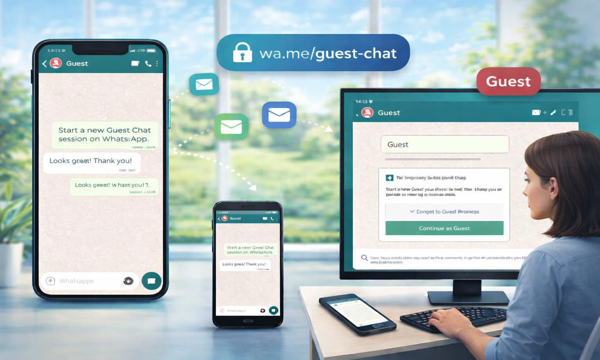
The WhatsApp Guest Chats feature allows users to send messages to non-WhatsApp users through a link-based system.
Instead of asking someone to download the app, create an account, and verify their number, users can simply generate a link and share it.
When the recipient opens the link, they are taken to a browser-based chat interface. From there, they can start messaging instantly.
This removes one of the biggest barriers in digital communication: app dependency.
How the Feature Works
The working mechanism behind WhatsApp Guest Chats is simple but powerful.
A WhatsApp user generates a unique invitation link. This link can be shared via SMS, email, or any other platform.
Once opened, the recipient is directed to a web interface similar to WhatsApp Web.
From there:
- The guest can read messages
- Reply in real time
- Continue the conversation without installing the app
This approach makes communication faster and more accessible.

Why This Feature Matters
This feature is important because it reduces friction in communication.
In many situations, asking someone to install a new app creates resistance. People may not want to download another app or share their phone number.
With WhatsApp Guest Chats, that barrier is removed.
This is especially useful for:
- Businesses التواصل with customers
- Freelancers dealing with new clients
- Customer support teams
- One-time interactions
It makes communication instant and flexible.
Limited Features in Early Versions
While the concept is powerful, the current version of WhatsApp Guest Chats is limited.
At the moment, it only supports basic text messaging.
This means:
- No voice notes
- No video calls
- No media sharing
- No group chats
These limitations are intentional.
By keeping the feature simple, WhatsApp ensures better performance and security while testing the concept.
Privacy and Security
Security is one of the biggest concerns in messaging platforms.
WhatsApp has built its reputation around End-to-End Encryption.
The good news is that Guest Chats are expected to maintain the same encryption standards.
This means:
- Only the sender and receiver can read messages
- No third party can access the conversation
- Privacy remains intact
Maintaining encryption is critical for WhatsApp’s global trust.
A Shift Toward Open Messaging
WhatsApp Guest Chats are part of a larger trend in the tech industry.
Messaging platforms are moving toward interoperability, where different services can communicate with each other.
This shift is partly driven by regulations like the Digital Markets Act, introduced by the European Union.
The goal is to:
- Increase competition
- Reduce monopolies
- Improve user choice
WhatsApp has already started testing third-party chats, allowing communication with users on other platforms.
Guest Chats take this idea even further.
Impact on Businesses and Professionals
One of the biggest advantages of WhatsApp Guest Chats is for businesses.
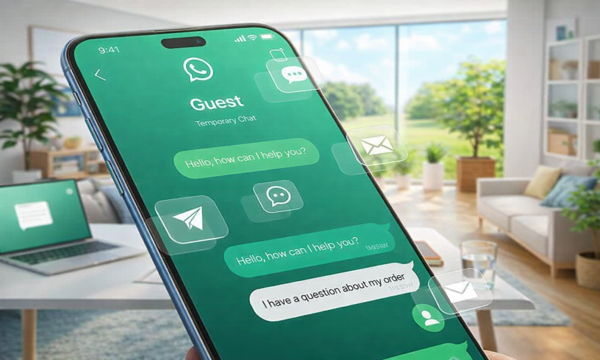
Companies can now communicate with customers without requiring them to install WhatsApp.
This is useful in:
- Customer support
- Online sales
- Service inquiries
For example, a business can send a chat link to a customer. The customer clicks it and starts chatting instantly.
This improves:
- Conversion rates
- Customer experience
- Response time
It also reduces friction in communication workflows.
Strategic Importance for Meta
WhatsApp is owned by Meta.
For Meta, this feature has strategic importance.
Competition in messaging is increasing, with platforms like Telegram and Signal gaining users.
By introducing Guest Chats, WhatsApp:
- Expands its reach
- Attracts new users
- Keeps existing users engaged
It also aligns with Meta’s broader goal of integrating its platforms, including:
- Facebook Messenger
This could lead to a more unified messaging ecosystem in the future.
Challenges and Risks
Despite its benefits, WhatsApp Guest Chats come with challenges.
1. Spam and Abuse
Allowing guest access may increase spam messages.
Scammers could misuse link-based chats.
2. Identity Verification
Since guests don’t have accounts, it becomes harder to verify who they are.
This can create trust issues in:
- Business communication
- Financial transactions
3. Technical Complexity
Supporting cross-platform messaging while maintaining encryption is technically challenging.
These issues may affect how quickly the feature is rolled out.
Real-World Use Cases
WhatsApp Guest Chats can be useful in many real-life situations.
Customer Support
Companies can provide instant support without requiring app installation.
Freelancing
Freelancers can communicate with clients quickly using links.
Temporary Conversations
Users can chat without long-term commitment or app downloads.
Event Communication
Organizers can share chat links for quick updates and coordination.
These use cases show the flexibility of the feature.
Future of Messaging Platforms
The introduction of WhatsApp Guest Chats reflects a broader change.
Messaging is moving from:
- Closed apps → Open communication systems
In the future:
- You may not need the same app to chat
- Conversations may start through links
- Messaging could become platform-independent
This shift could redefine digital communication.
Pros and Cons
Pros
- No app installation required
- Easy link-based communication
- Maintains encryption
- Useful for businesses
- Reduces communication barriers
Cons
- Limited features
- No media or calls
- Potential spam risks
- Identity verification issues