Xiaomi Smart AC Mijia Review: Intelligent Climate Control with Human Detection
Xiaomi has introduced a smart air conditioner under its Mijia brand capable of adjusting temperature and airflow automatically using human detection. This model represents the next step in smart home climate control, where sensors, artificial intelligence, and adaptive algorithms optimize comfort while improving energy efficiency.
As households increasingly adopt smart home technology, appliances such as air conditioners are no longer static devices. Xiaomi’s approach integrates radar-based human detection, predictive learning, and app-based connectivity to create an intelligent, responsive cooling system.
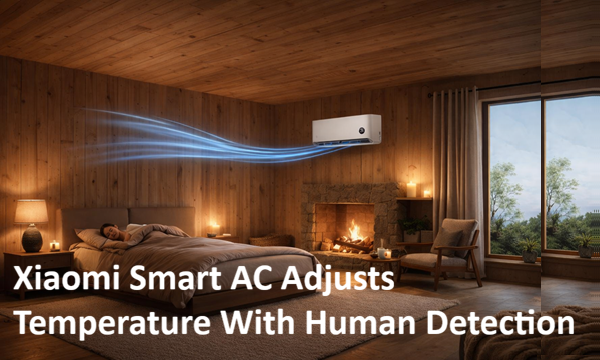
Human Detection Technology
At the core of the Xiaomi Smart AC is a dual millimeter-wave radar sensing system. Unlike traditional infrared motion sensors, these radars can detect:
- Presence and movement of people in the room
- Approximate position and distance from the device
- Stationary occupants for consistent comfort
The AC automatically adjusts airflow direction and intensity based on where people are located. It can:
- Direct cool air toward occupants when rapid cooling is needed
- Shift airflow away to prevent direct discomfort
- Reduce activity or enter energy-saving mode when no one is present
This sensor-driven approach ensures a more personalized and energy-efficient experience than conventional timers or static temperature settings.
Mechanical Design and Airflow Engineering
The AC unit combines advanced sensing with enhanced hardware to deliver rapid and precise cooling:
- Large cross-flow fan and extended air deflector panels
- Airflow volume up to 780 cubic meters per hour
- Cooling and heating coverage up to 10 meters
- Multiple airflow modes for directional, soft, or broad circulation
Xiaomi emphasizes quiet operation, with noise levels as low as 16 decibels in low-power mode—ideal for bedrooms and living spaces.
AI-Driven Preference Learning
The smart AC also incorporates artificial intelligence to learn user habits:
- Analyzes past temperature settings and schedules
- Automatically adjusts before manual input is required
- Builds a personalized climate profile for the household
Xiaomi claims that this predictive control can improve energy efficiency by up to 25% compared to traditional operation modes. The AI optimizes both comfort and electricity consumption, addressing one of the main inefficiencies in home cooling.
Integration with Smart Home Ecosystem
The AC integrates seamlessly into Xiaomi’s HyperOS platform and Mi Home app, enabling:
- Remote monitoring and control
- Temperature and mode adjustments
- Maintenance alerts like filter cleaning reminders
- Over-the-air updates to improve features and efficiency
Voice control is also supported via XiaoAI, allowing for spoken adjustments. The device can coordinate with other smart home products, such as:
- Air purifiers
- Humidity sensors
- Window or blind controllers
This cross-device integration highlights Xiaomi’s approach of treating appliances as connected nodes rather than standalone devices.
Energy Efficiency and Sustainability
Energy efficiency is a key focus:
- Top-tier rating under Chinese appliance standards
- Reduces annual electricity consumption by ~200 kWh
- Automatically lowers power when rooms are unoccupied
Automated, sensor-based operation addresses the common issue of running air conditioning in empty rooms, enhancing both convenience and sustainability.
Privacy and Radar Advantages
Millimeter-wave radar offers distinct advantages:
- Preserves privacy (no cameras capturing images)
- Detects stationary occupants more accurately than infrared sensors
- Works reliably in varied lighting and room conditions
This makes the Xiaomi Smart AC suitable for bedrooms, offices, and shared spaces where privacy and comfort are priorities.
Comparison to Traditional Smart ACs
Earlier smart ACs typically relied on:
- Timers or preset schedules
- Infrared motion sensors
- Smartphone geolocation triggers
Xiaomi’s model advances the field by:
- Detecting human presence continuously
- Adjusting cooling direction and intensity in real time
- Combining AI learning with mechanical airflow design
This evolution reflects a broader trend toward context-aware appliances in the connected home.
Target Users
The Xiaomi Smart AC is ideal for:
- Smart home enthusiasts
- Energy-conscious households
- Users seeking automated comfort without constant manual adjustments
- Those concerned about privacy but wanting intelligent temperature control
By offering automated, sensor-driven cooling, Xiaomi makes air conditioning more convenient and environmentally friendly.
Pros and Cons
Pros
- Dual millimeter-wave radar for precise human detection
- AI-driven temperature and airflow adjustment
- Fast cooling/heating with multiple airflow modes
- Quiet operation (16 dB low-power mode)
- Integration with Mi Home app and HyperOS ecosystem
- Energy-efficient operation with predictive learning
Cons
- May be priced higher than conventional ACs
- Optimal performance depends on smart home ecosystem usage
- Requires proper installation and space for airflow efficiency
The Xiaomi Smart AC with human detection represents a new era in climate control. By combining radar sensors, AI learning, and responsive airflow, it delivers comfort tailored to the presence of occupants while optimizing energy consumption.
It’s particularly useful for medium-sized rooms and households looking for smart, privacy-conscious, and energy-efficient cooling.
This AC illustrates the future of connected home HVAC, where appliances adapt automatically to human behavior rather than relying on fixed settings.
Xiaomi has taken a significant step forward in smart home climate control. With human detection, AI optimization, and seamless app integration, this air conditioner offers both convenience and energy savings.
As more households adopt connected appliances, features like presence-aware cooling are likely to become standard, setting a new benchmark for automated, responsive home comfort.